Lily Leaf Beetle Tracker
  • Home
  • Lily leaf beetle life cycle
  • Host Plants
  • Biological Control
  • News (updated 29 June 2021)
  • Lily beetle distribution (North America)
  • Thank you!! 2021 Citizen Science
  • Merci!! Science citoyenne 2021
  • The Dog-Strangling Vine Page

Wanted: observations of lily leaf beetle attacking native lilies!

5/1/2014

1 Comment

 
Picture
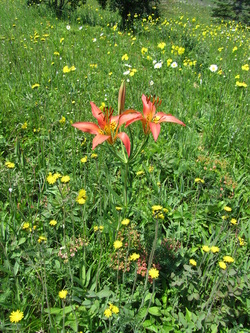
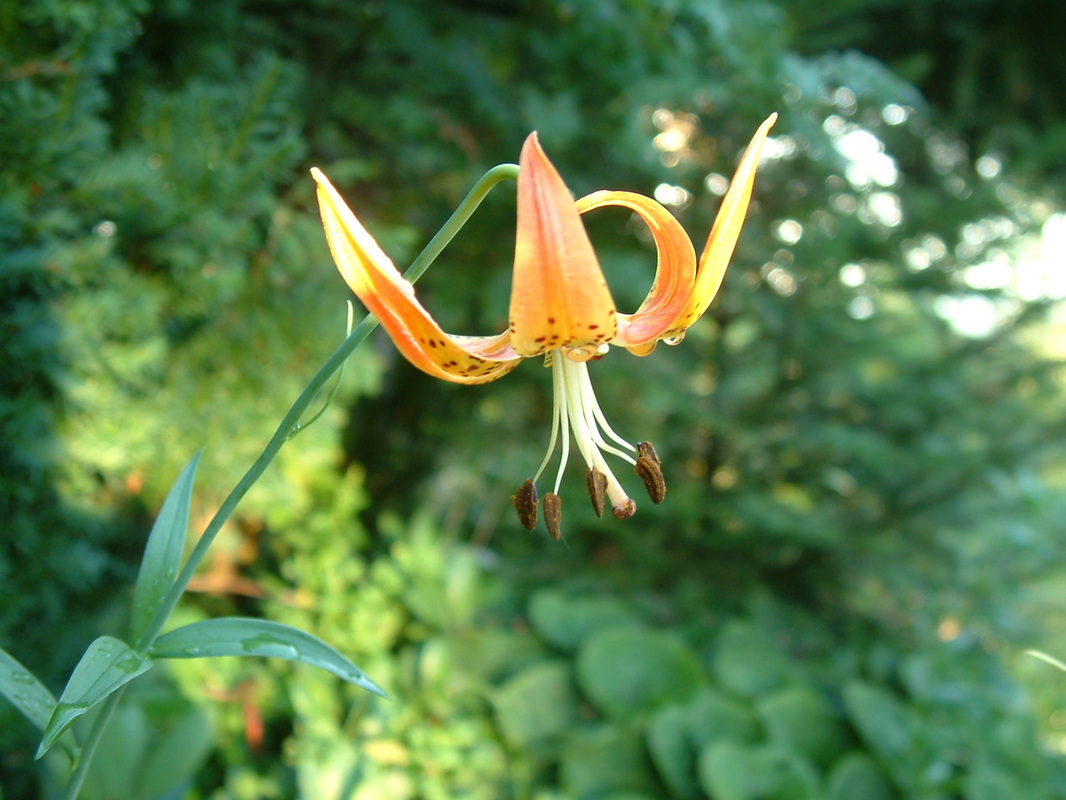
Help us focus our biological control efforts on protecting populations of Canada lily (Lilium canadense), Michigan lily (Lilium michiganense),Turk’s cap lily (Lilium superbum) and wood lily (Lilium philadelphicum).  These species are all endangered or threatened in certain states/provinces.  All four species occur within the range of the lily leaf beetle.

There has been good documentation of lily leaf beetle on Canada lily in Quebec, and the absence of the beetle on wood lily in Ontario (1).  However, as the beetle spreads through Southern Ontario, reports of lily leaf beetle attacking populations of Michigan lily are becoming more common. We need to document the extent of this invasion, start monitoring lily populations and eventually introduce biological control agents at these sites.

Turk’s cap lily does not occur in Canada, but is present in several northeastern US states where the lily leaf beetle is a serious garden pest.  Please let us know if you see beetles on this species.

A great site for ranges, photos and legal status of native lily species is the UDSA Plants database.  Click on “subordinate taxa” for range maps and information on individual Lilium species.

You can use our form to report your observations.


Thanks for your help!


(1) Bouchard, A.M., McNeil and Brodeur, J.N. (2008) Invasion of American native lily populations by an alien beetle. Biological Invasions 10, 1365–1372.
1 Comment

Voles dug up my lilies

4/28/2014

0 Comments

 
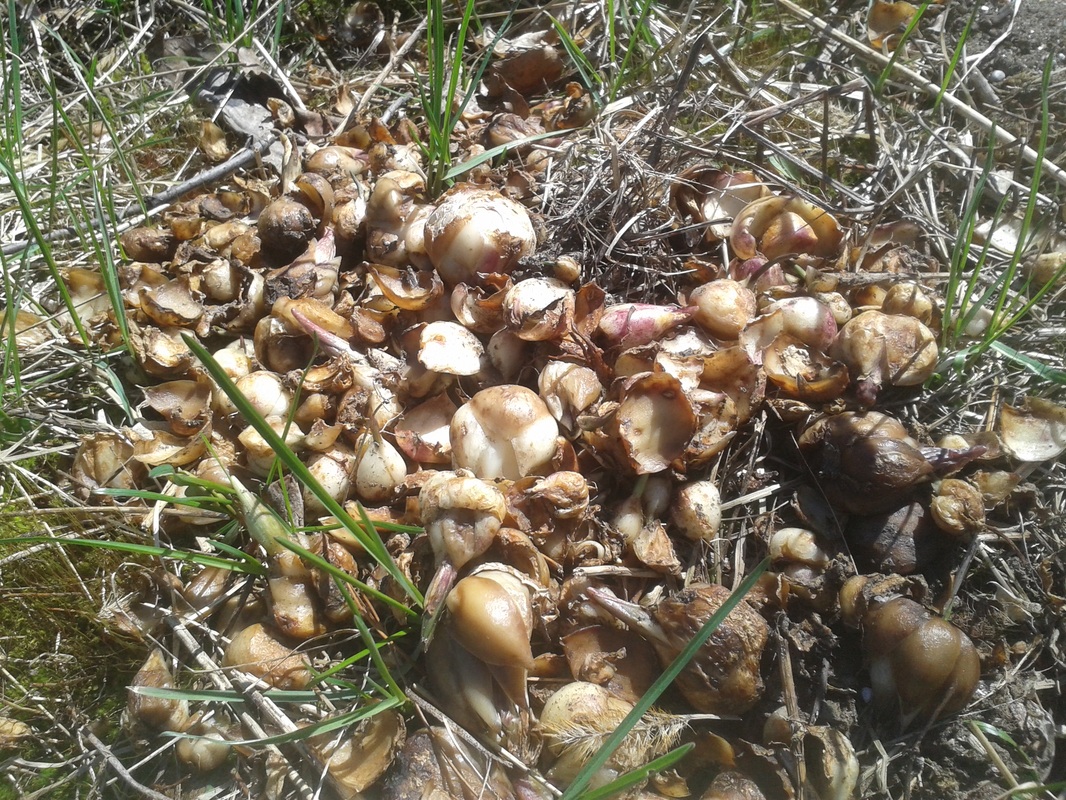
Meadow voles have apparently been very abundant here on the Central Experimental Farm this winter.  What used to be my experimental lily garden is a mess of trails and tunnels and a big cache of partially eaten bulbs.  
Picture
The silver lining to this vole outbreak is that we have had the privilege of watching snowy owls hunt them over the past month!
0 Comments

Novel host plant records

3/29/2014

0 Comments

 
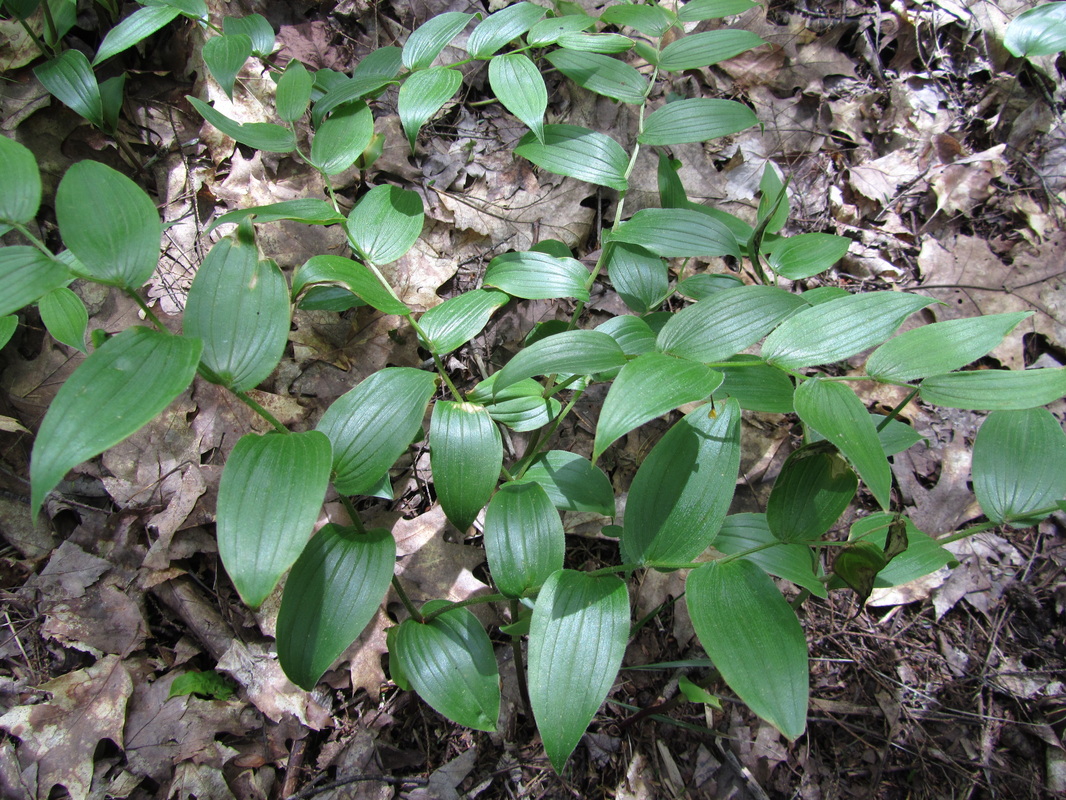
Welcome, or welcome back, to my Lily Leaf Beetle Tracker page, where I provide information on the spread and control of the lily leaf beetle, Lilioceris lilii. Although the lily beetle is primarily known as a garden pest, it has also been reported to attack native lilies, some of which are threatened or endangered in parts of their range.  This coming year, we would like to emphasize the beetle's shift onto novel host plants and focus our biocontrol efforts on protecting native lilies.

Last summer (2013), we found lily beetle eggs on claspleaf twistedstalk Streptopus lanceolatus (shown below) in the Gatineau Park north of Ottawa just across the Quebec border.  Although the larvae from the eggs we found failed to survive, we have nevertheless been quite successful rearing larvae on twistedstalk in the lab. Claspleaf twistedstalk is endangered in New Jersey and Pennsylvania.
Picture
We have also received a report of lily beetles observed feeding on Lilium michiganense in southern Ontario.  This beautiful lily is endangered in New York State.  

If you see lily leaf beetles on other plants besides cultivated garden lilies and fritillarias, please let us know by submitting the form on the Report an Infestation page.  Note that lily beetle adults will commonly rest on other plants without actually feeding on them.  We are interested in reports of feeding or egg laying on new host species.  When you're not sure whether the beetles are actually feeding on a plant, put a few of them in a jar with some undamaged leaves and see if they will feed. (This would make a great science fair project for kids!)

Looking forward to hearing about your observations!
0 Comments

Exciting biocontrol news!

10/3/2013

2 Comments

 
Picture
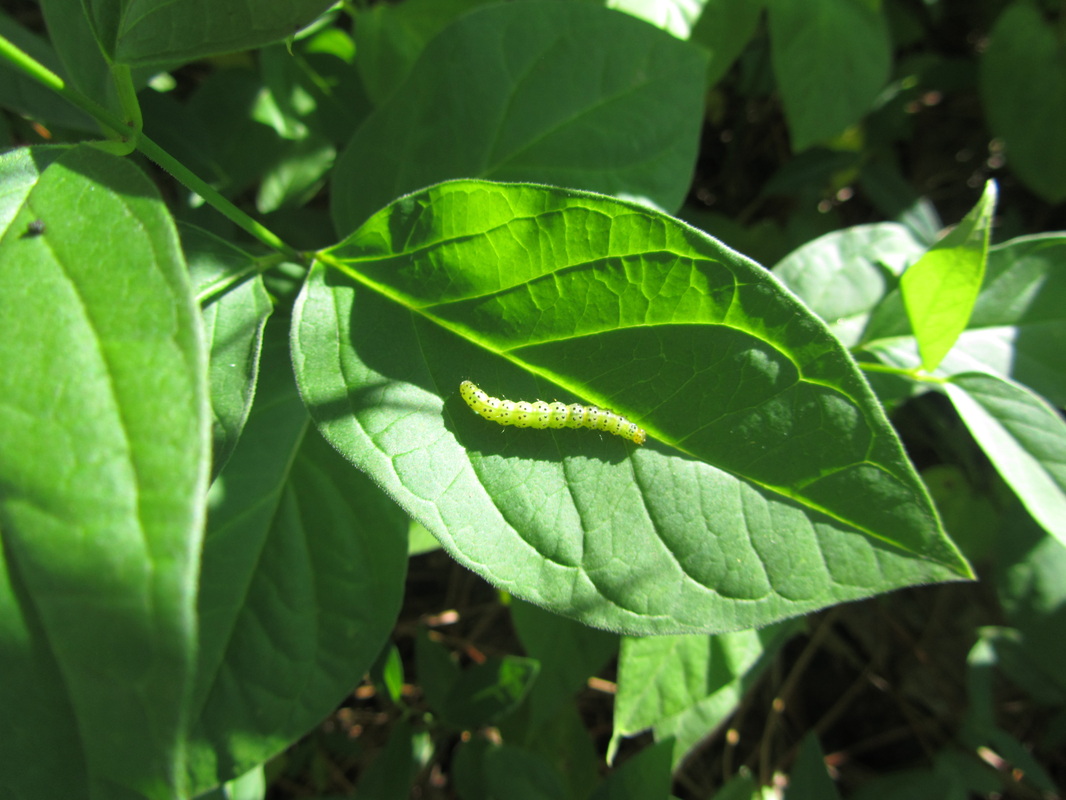
On Friday, September 20, we released 500 Hypena opulenta caterpillars in Ottawa to combat dog-strangling vine.  Dog-strangling vine (DSV), Vincetoxicum rossicum, also known as pale swallow-wort, is a highly invasive plant introduced from Ukraine that has invaded many natural areas in Ontario, especially around Toronto and Ottawa, and the northeast US.  Once it invades an area, DSV forms thick monocultures and is extremely difficult to eradicate. It is toxic to mammals and to monarch butterflies, which sometimes make the mistake of laying eggs on DSV instead of on their usual host, milkweed. 

Like its host plant, Hypena opulenta is native to Ukraine. Before it could be released as a control agent, it underwent stringent testing to make sure it would not feed on other plants, especially DSV’s relatives in the milkweed family, some of which are endangered.  Once the panel of expert reviewers was convinced that the risk of Hypena attacking other plants was vanishingly small, the release was approved. The first release of 500 larvae will test whether the agent can successfully overwinter here in Ottawa.  Additional releases are planned for next spring.

The caterpillars we released will soon pupate in the litter around the plants and emerge next spring as adult moths.  Hopefully next spring we will see lots of feeding damage on DSV leaves! 

Links to the host-specificity testing conducted at the University of Rhode Island by students in Richard Casagrande’s lab:

http://cels.uri.edu/news/nSwallowWort.aspx

http://digitalcommons.uri.edu/dissertations/AAI1497502/

http://www.dartmouth.edu/~asweed/Research/Welcome_files/Hazlehurst-2012.pdf

2 Comments

No beetles at the burnt lands alvar

7/10/2013

0 Comments

 
Picture
For several years now, we have been checking the wood lilies at the Burnt Lands Alvar in Almonte, ON, expecting that they will eventually be colonized by the lily leaf beetle.  Although populations of Canada lily have been decimated in Quebec and the Maritimes, the lily beetle has not yet been reported on populations of wood lilies.  This is curious, because the plant is a highly suitable host plant for larval development. 


0 Comments

On the trail of the lily beetle invasion

6/27/2013

7 Comments

 
The first lily leaf beetle recorded in North America was observed in Montreal in 1943.  It wasn’t until about 40 years later that the beetle started appearing elsewhere in North America, and since then, its spread has been rapid. In the US, it is now found in New York, New Jersey and all six New England states, as well as in the state of Washington on the west coast.  In Canada, it has been recorded in every province except Saskatchewan and Newfoundland (update July 13, 2016: it is now found in both these provinces).

Did the lily beetle spread throughout its current range from its established base in Montreal?  Or were multiple introductions from Europe responsible for the beetle’s present distribution?  And where exactly in Europe did the North American populations originate from?

These are the questions that University of Montreal student Alessandro Dieni is addressing as his Master’s research topic. With the help of collaborators, Alessandro has obtained samples from throughout the North American and European ranges.  Using a technique called AFLP (Amplified fragment length polymorphism), he will be able to detect differences and similarities among the populations.  His preliminary results suggest that the populations from Montreal and Quebec City form one genetically similar group, distinct from the New Brunswick samples, pointing to the possibility of more than one invasion.  Still to be determined is the European origin of the invasion, as the North American populations are quite distinct genetically from the Swedish and Swiss beetles he has analyzed.   

Understanding invasion routes can help us pinpoint hotspots from which invaders tend to originate.  These areas can then be targeted for increased surveillance of imported goods.  Studies such as Alessandro’s can also provide valuable information to aide biological control efforts.  Biocontrol agents imported from an invader’s region of origin share a coevolutionary history with the invader, and are expected to be better suited to attack their host. 

We’ll look forward to hearing about the results of this important study!

This post is based on Alessandro’s essay published in Antennae, the Bulletin of the Quebec Entomological Society (Bulletin de la Société d’entomologie du Québec, 2013, vol. 20, no. 2, pp 3-6), which, in turn, was based on his poster, which won the Prix Melville-Duporte for the best scientific poster at the Society’s annual meeting.


7 Comments

Lily Beetle numbers down in eastern Ontario this year

6/18/2013

0 Comments

 
I've been getting reports from gardeners throughout eastern Ontario that lily beetle numbers appear to be down this year compared to last year.  In Ottawa, many gardens that were hit hard in previous years have had very few adults this year.  It would be nice to be able to say that this was a result of successful biological control, but there simply hasn't been enough time for the wasp Tetrastichus setifer to have spread throughout the region since its release in 2010.  Here's my hypothesis: the severe drought we had last summer affected larval or pupal survival.  I've noticed that the larvae have a hard time forming a cocoon out of soil particles when the soil is too dry.

Reports of low numbers in Massachusetts (and possibly Connecticut?) are likely due to the spread of the biocontrol agents from the release sites.  

Reports from Manitoba and from the Maritime Provinces indicate that lily beetle populations are going strong in those areas.

Write and let us know whether your beetle infestation seems more or less severe this year compared with previous years!
0 Comments

Biological control agents at work

6/2/2013

1 Comment

 
Picture
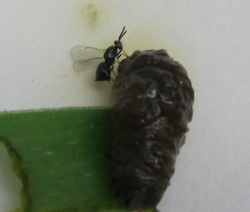
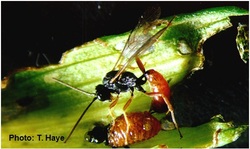
Our biological control agent, Tetrastichus setifer, is emerging in the lab from cocoons sent to us from Switzerland.  The females will happily parasitize larvae in Petri dishes and small cages.  They don't seem to mind having to lay an egg through all that poop. In fact, they appear to have trouble finding their host if the fecal shield has been removed!


We are letting the wasps do their work in the lab, instead of releasing them into the field. Larvae naturally occurring in our experimental garden will be collected every week to see if they are parasitized by wasps that have successfully overwintered. That way, we will know if our population from our 2010 release is still going strong.  Some of the larvae parasitized in the lab, like the one in the picture, will be released into the garden when they are ready to form their cocoons, to bolster the population.  Others will be overwintered in the lab. Our goal is to have a big enough population in a couple of years to support releases at other sites.

1 Comment

The brown marmorated stink bug

5/9/2013

2 Comments

 
Picture
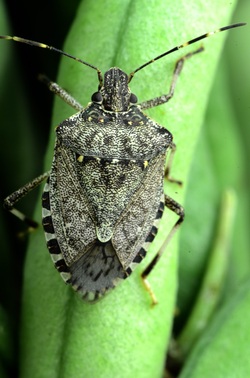
This bug is not a lily pest.  It is the brown marmorated stink bug Halyomorpha halys (BMSB), a native of Korea that has been ravaging crops in the eastern US for the past several years.  It has recently become established in Ontario, around Hamilton. The photo was taken by our Swiss biocontrol colleague, Dr. Tim Haye, who is mapping the distribution in Europe where the bug is also invading (the site is in German, but Google will provide an entertaining translation).

In addition to its impact on crops and garden plants, the BMSB is a nuisance in the fall when it invades homes looking for places to spend the winter.  

Tracking this pest is essential to developing an effective management plan.  The Ontario Ministry of Agriculture and Food asks that anyone who believes they have found this bug contact them at 1-877-424-1300 or [email protected] .  Specimens and high quality photos are essential since there are native stink bugs that look similar.  You are also welcome to upload photos using my Report an Infestation page.


2 Comments

BIocontrol update

5/9/2013

0 Comments

 
Picture
We are now authorized to release a second biocontrol agent in Canada: Lemophagus errabundus.  It is too late to arrange for a shipment this year, as our Swiss colleagues need to start collecting and rearing them a year in advance.  Release is planned for summer 2014 here in Ottawa.

A shipment of Tetrastichus setifer is due in next week for release in Ottawa in June. 


0 Comments
<<Previous
Forward>>

    Author

    Naomi Cappuccino was a member of the Department of Biology at Carleton University in Ottawa, Ontario, Canada. She is now retired and no longer updating this site.

    Archives

    June 2021
    June 2016
    May 2016
    September 2015
    June 2015
    June 2014
    May 2014
    April 2014
    March 2014
    October 2013
    July 2013
    June 2013
    May 2013
    April 2013
    February 2013
    January 2013

    Categories

    All

    RSS Feed

Powered by Create your own unique website with customizable templates.